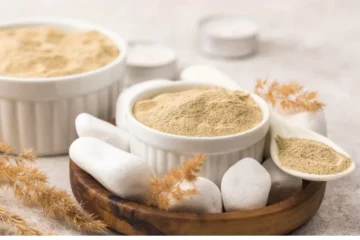

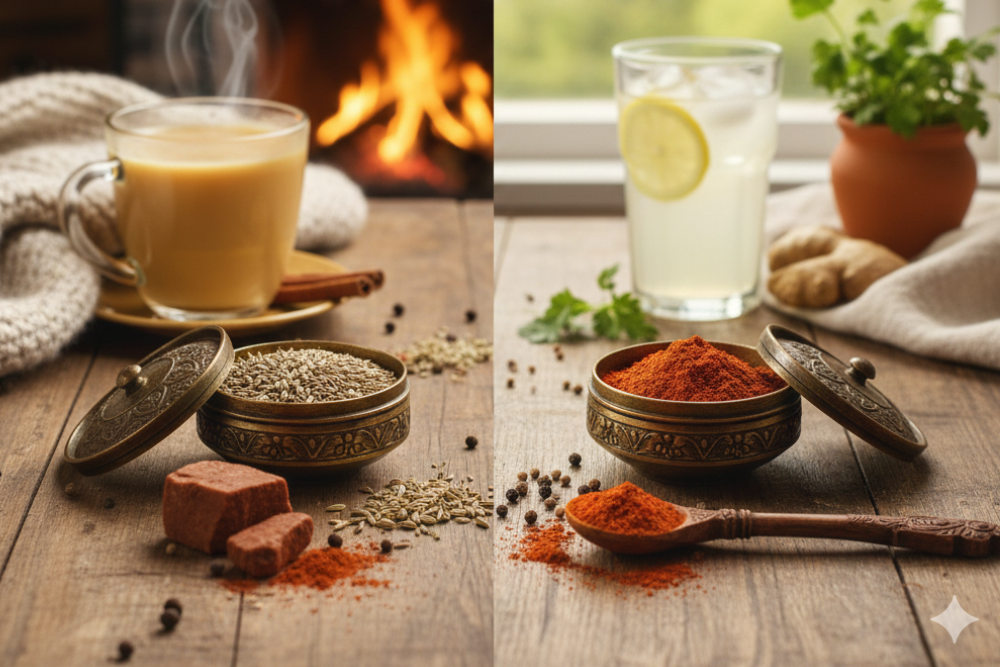
Hing, or asafoetida, is a traditional spice valued for its digestive and warming properties. Many people notice that hing feels more effective in cold weather than in summer. This blog explores Why Hing Works Better in Winters Than in Summers and answers common questions about asafoetida seasonal benefits and hing warming effect.
Why does hing (asafoetida) feel more effective for digestion during winter compared to summer?
Short Answer: Hing feels more effective in winter because its warming properties counter cold-induced sluggish digestion.
Detailed Answer:
- Winter slows metabolism, making digestion heavier and slower.
- Hing stimulates gastric juices, improving breakdown of food.
- Its warming effect balances vata and kapha doshas aggravated in cold weather.
- Hing prevents heaviness and indigestion common in winter diets.
- In summer, lighter foods reduce the need for hing’s strong digestive support.
Can hing help reduce heaviness, bloating, and gas after rich winter meals?
Short Answer: Yes, hing reduces bloating, gas, and heaviness after rich winter meals.
Detailed Answer:
- Hing acts as a carminative, expelling excess gas from intestines.
- It relaxes intestinal muscles, easing discomfort after heavy meals.
- Hing prevents fermentation of lentils and beans, reducing bloating.
- Its anti-inflammatory properties soothe the digestive tract.
- Adding hing to gravies and pulses ensures smoother digestion in winter.
Does hing have warming properties that make it better suited for cold weather?
Short Answer: Yes, hing’s warming properties make it ideal for cold weather digestion and gut comfort.
Detailed Answer:
- Hing increases circulation in the gut, reducing cold-induced sluggishness.
- Its volatile oils generate internal warmth, aiding digestion.
- Ayurveda classifies hing as a warming spice that balances winter doshas.
- Hing prevents accumulation of undigested food in cold weather.
- Regular hing use in winter meals ensures sustained digestive comfort.
Is hing safe to use daily in winter, and how much should I add to my food?
Short Answer: Hing is safe daily in winter when used moderately—1–2 pinches per dish.
Detailed Answer:
- Safe Quantity: 0.5–1 gram daily is sufficient for adults.
- Kids: Use a tiny pinch in cooked dishes to avoid strong flavor.
- Elderly: Hing aids weak digestion and prevents constipation in winter.
- Sensitive Stomachs: Hing should be consumed sparingly to avoid irritation.
- Excess Use: Large amounts may cause acidity; moderation is key.
| Group | Recommended Hing Quantity |
|---|---|
| Adults | 1–2 pinches daily |
| Kids | Tiny pinch in cooked food |
| Elderly | 1 pinch daily for digestion |
| Sensitive Stomachs | Minimal use, preferably cooked |
What are the best winter dishes where hing enhances both flavor and digestive comfort?
Short Answer: Hing enhances lentils, beans, gravies, soups, and winter teas for flavor and digestion.
Detailed Answer:
- Lentils: Hing prevents gas and heaviness in dal preparations.
- Beans: Adding hing reduces bloating in rajma and chole.
- Gravies: Hing enriches flavor and aids digestion in spicy curries.
- Soups: Hing with cumin and pepper boosts warmth and comfort.
- Teas: Hing with ginger and honey soothes bloating after meals.
| Dish | Hing Benefit |
|---|---|
| Lentils (Dal) | Prevents gas and heaviness |
| Beans (Rajma, Chole) | Reduces bloating and discomfort |
| Gravies | Enhances flavor and digestion |
| Soups | Boosts warmth and gut comfort |
| Teas | Soothes bloating after meals |
Conclusion
The Why Hing Works Better in Winters Than in Summers lies in its warming properties and digestive support. Hing reduces bloating, gas, and heaviness after rich winter meals, balances doshas, and enhances flavor in heavy dishes. Safe daily use in moderation ensures gut comfort and health. At Hingwala, we recommend embracing hing benefits in winter to enjoy seasonal meals without discomfort and to harness the full asafoetida seasonal benefits.